
Famco Chimney Sweep in Garden Grove: A Homeowner’s Guide
If you searched “Famco chimney sweep,” you’re probably standing in front of a cap that’s rusted through, a damper that won’t close, or a vent fitting that no longer fits. Here’s the part that saves you a wasted call: Famco is a manufacturer of chimney caps and venting products, not a sweep company. The name on your chimney hardware and the service you need are two different things. This guide sorts out which one you actually need, and how to get it done right in Garden Grove.
What Does Famco Actually Make?
Famco is a ventilation and chimney-accessory manufacturer. The products you’re most likely to find with that name on them are chimney caps, draft inducers, and vent hoods. These are the pieces that sit at the top of the system or handle airflow through it. They aren’t cleaning tools, and they aren’t a service.
That distinction matters because it explains why searching the brand name leads you somewhere strange. You have a hardware problem. The brand made the hardware. The brand does not send anyone out to look at it.
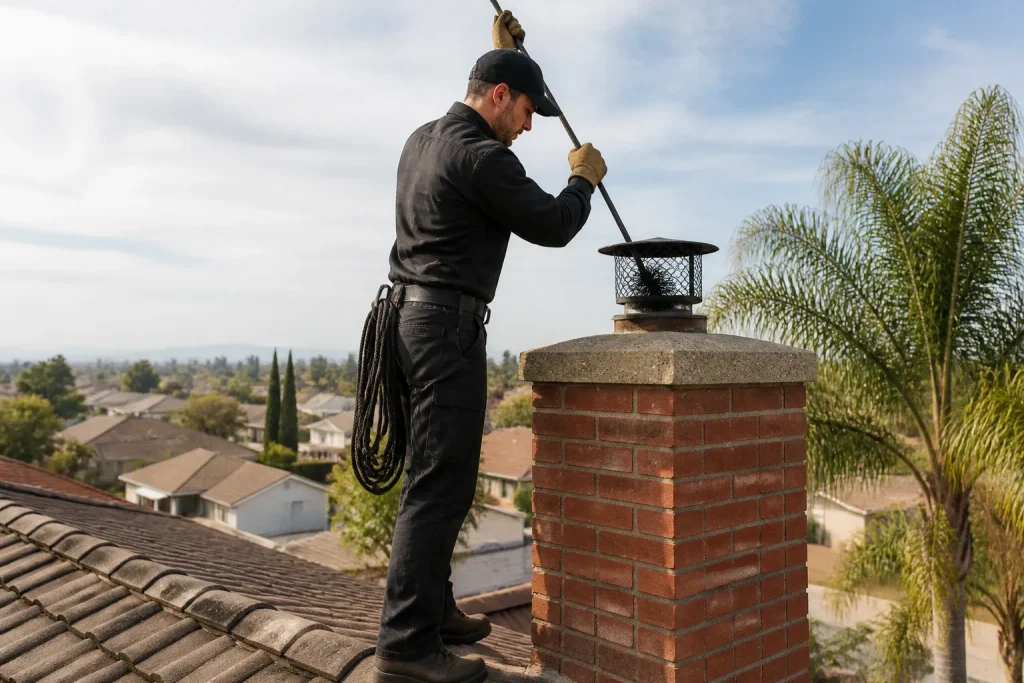
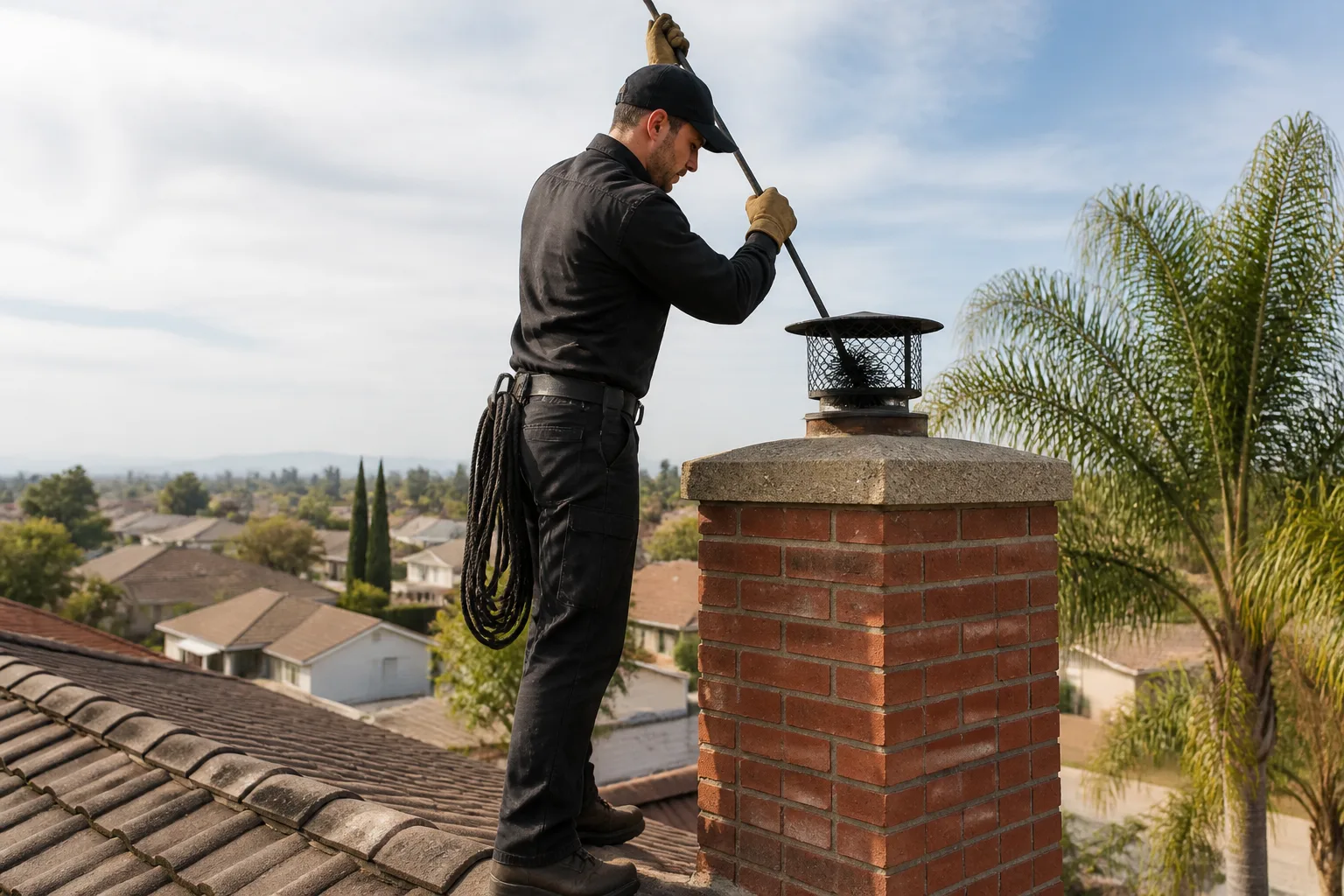
A chimney cap is the most common Famco-labeled part at the top of a residential chimney. It’s a lid with screened sides that keeps rain, animals, and debris out while letting smoke and gases escape. A draft inducer is a fan-assisted component meant to help exhaust flow on certain venting setups. A vent hood covers a sidewall or appliance vent termination. Where these parts sit in a chimney system:
- At the crown and flue – the chimney cap, which is the part most Garden Grove homeowners interact with.
- Along the vent run – draft inducers and vent hoods, usually tied to specific appliance or boiler venting, not a standard wood fireplace.
- Inside the flue – the liner itself, which is a separate system from any cap or hood. DuraFlex stainless liner is the kind of professional-grade material that goes here, and it’s a different decision from the cap on top.
If your search was really about a failed cap or a draft you can’t explain, you’re in the right place. If you were looking for a sweep, that’s a different visit, and we’ll get to the difference shortly.
Why Homeowners Search for Famco by Name
People don’t usually look up a cap manufacturer out of curiosity. They search the brand because something on the roof stopped doing its job and the name was stamped on the part. In our experience around Garden Grove, a few situations account for almost all of those searches.
The cap failed. Screens rust out, spot welds let go, and a cap that’s been sitting in the sun and weather for years can lose its footing. Wind finishes the job. Once it’s loose or gone, everything it was keeping out gets in.
Downdraft or smoke spillage. Smoke rolls back into the room instead of going up. Sometimes a cap with the wrong airflow profile contributes to this. Sometimes the cause is lower down, in the flue or the firebox. A draft inducer is built for particular venting setups, and it’s not the answer for every smoke problem.
Animal intrusion. A missing or damaged screen turns a flue into a very attractive tunnel. Birds, squirrels, and raccoons find it fast. Nesting material left in a flue is a fire risk when you next light a fire, which is why we take it seriously.
Water in the chimney. Staining on the firebox ceiling, a musty smell, or rust on the damper often traces back to the top. A missing cap or a cracked crown are the two most common entry points for water damage, and both are preventable.
Notice the pattern: each of those is a hardware or access problem, and none of them is solved by brand recognition alone. The part has to be matched to your flue, installed correctly, and confirmed to be sitting on a crown that’s still sound.
How Should a Chimney Cap Be Sized for a Garden Grove Home?
Correct cap sizing to the flue tile dimensions matters more than the brand on the box. A cap that’s too small binds, sits crooked, or leaves a gap around the flue. One that’s too large catches wind instead of shedding it and can shift in a storm. The flue tile is the measurement that drives the fit, and it’s the first thing a professional checks.
Garden Grove homes add a wrinkle that shows up often: stucco exteriors. Stucco wraps the outside of the chimney chase, and the top of that chase takes weather on a hard, brittle surface. Fastening a new cap or crown onto a stucco-topped chase calls for a method that seals the penetration rather than cracking the stucco around it. A cap that’s simply screwed down without attention to that detail leaves a small leak path that grows every rainy season.
Comparing cap brands, the practical differences come down to material gauge, how the screen is attached, and whether the frame is built for the size of your flue. Professional-grade caps – the kind that share a shelf with lines like Olympia Chimney or Gelco – tend to hold up better against sun and wind than a thin hardware-store substitute. But a well-made cap in the wrong size still performs worse than a properly fitted one in a good material. Fit first. Brand second.
What a Professional Visit Actually Involves Beyond the Cap
Swapping a cap is a fifteen-minute job if that’s all you do. A professional visit is broader, because the cap is a symptom at the top and you want to know what’s happening below it. Here’s what a proper cap replacement visit looks like.
- Inspect the crown. The crown is the concrete or masonry top surrounding the flue. If it’s cracked or spalling, a new cap sits on a failing base. Crown repair and cap installation belong in the same conversation.
- Measure the flue tile. Actual dimensions, so the replacement cap fits.
- Look down the flue. A camera check catches what a visual can’t – cracked tile, gaps in the liner, or a nest left by an animal. You should see the evidence yourself, not just hear about it.
- Check the damper and firebox. A damper that doesn’t seal is a heat loss and a draft problem. Firebox joints that are open are a repair item.
- Confirm the cap is secure and sealed. Fastened correctly, screened, and sitting level.
One thing to be clear on: none of this replaces a chimney sweep. A sweep removes creosote and soot from the flue, which a cap visit doesn’t do. The two jobs are complementary. If it’s been a while, do both.
What Actually Happens If You Ignore the Problem?
It depends on which problem you have, but the direction is always the same: small and cheap becomes larger and structural.
A missing cap lets water in. Water works on the firebox, the damper, and the masonry itself. A cracked crown does the same thing more slowly, and both can lead to a chimney repair bill instead of a cap bill. An animal nest left in a flue is combustible material sitting inside a flue on the next fire. Creosote – especially the glazed, hard type that builds from repeated fires on green wood – is what a chimney fire feeds on, and that’s a hazard we won’t talk around.
Smoke spillage from a draft problem is its own concern. If combustion gases can’t go up reliably, they can come back into the room. Carbon monoxide is odorless, so a poorly drafting system is not something to test by nose. A professional evaluation is the safe way to find out whether your setup is venting correctly.
A liner in poor condition is a separate issue that sometimes comes up during the same inspection. Where a sweep-only company might write off an aging flue, HeatShield liner restoration can extend the life of a chimney that’s still structurally sound and doesn’t yet need a full reline. That’s a decision made on evidence, though, and not every chimney is a candidate.
When Should You Call a Pro?
Most of the time, yes. Cap and crown work happens on top of the chimney, which means a ladder, a roof line, and work above ground. The stakes are high enough that a trained professional should be the one up there. That’s a safety caveat, not a sales pitch – height work on stucco-topped chases and caps that need to be secured and sealed is a job where skill matters. Add to that the flue itself, where creosote and carbon monoxide make a trained eye worth having.
Call a pro if you notice any of the following:
- A missing, loose, or rusted-out cap
- Smoke rolling back into the room when you use the fireplace
- Water stains or a musty smell near the firebox
- Scratching or flapping sounds in the flue
- A damper that won’t open, close, or seal
- Cracks in the crown or visible damage at the top of the chase
This is also a good moment to think about service season. Garden Grove’s winters are mild, so the pull toward a chimney visit isn’t snow. It’s the approach of burning season. Booking a sweep and inspection before the first fire of the year means any problems get caught in daylight and in good weather, not on the night you wanted a fire.
Related services in Garden Grove: if your damper or firebox needs work, see fireplace repair. For the sweep and inspection side, start with a Garden Grove Chimney Sweep Pros visit and we’ll build the plan from what the camera shows.
The Bottom Line
Famco makes chimney caps, draft inducers, and vent hoods – not sweeps. If you searched for the brand in Garden Grove, the reason is usually a failed cap, a draft problem, an animal in the flue, or water getting in. The fix isn’t brand loyalty. It’s a properly sized cap on a sound crown, plus a look down the flue to see what the cap was supposed to be protecting. Professional-grade materials – DuraFlex liner, Olympia caps, Gelco, and HeatShield for restoration where a chimney qualifies – are a help, but fit and installation come first.
One company handles the sweep, the inspection, the repair, and the cap, so there’s no handoff and no gap between visits. If you’re in Garden Grove and need help, Garden Grove Chimney Sweep Pros offers free estimates. Call (833) 629-1431. We answer 24/7. Fast dispatch from 7am to 7pm, Sunday through Friday.
Frequently Asked Questions
No. Famco is a manufacturer of chimney caps, draft inducers, and vent hoods, not a service. If you searched the name because a part on your chimney carries it, the visit you need is from a chimney specialist who can size and install a replacement correctly.
Almost always just the cap, and possibly crown repair if the top is cracked. A camera inspection and a visual check of the crown will tell you which. Call (833) 629-1431 for an exact quote – estimates are free.
Heavier-gauge professional caps hold up better against sun and wind than thin hardware-store substitutes. Fit to your flue tile matters more than the brand, so measure first, then choose material.
Most guidance says annually for a wood-burning fireplace in regular use, and a gas fireplace still needs a periodic inspection. Call (833) 629-1431 for an exact quote – estimates are free.
Written by the team at Garden Grove Chimney Sweep Pros.
Need Chimney Cleaning Help?
Call Garden Grove Chimney Sweep Pros - the local pro we connect you with is licensed and insured, here with fast help in Garden Grove.
(833) 629-1431